What’s Happening?
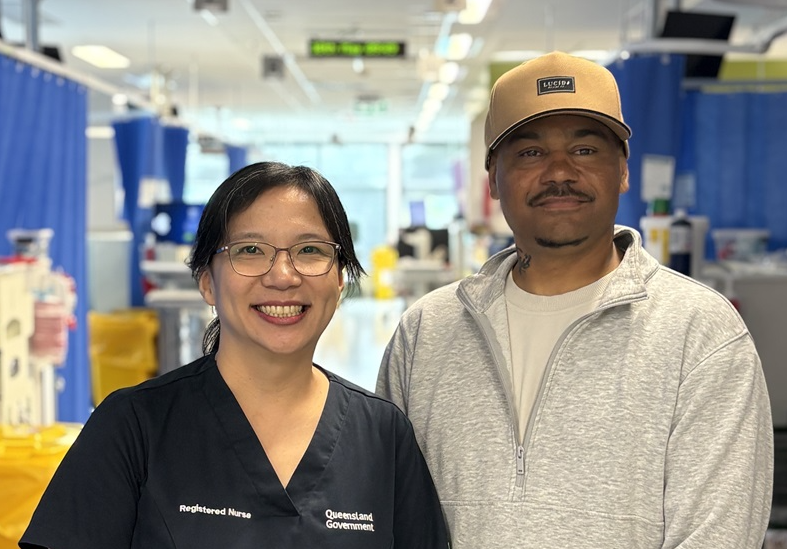
Mackay man Tristram Creek says a kidney and pancreas transplant has given him a new chance at life.
The 40-year-old First Nations man, originally from Cairns, has lived in Mackay for the past eight years. Earlier this year, he received a double organ transplant at Westmead Hospital after a long health battle.
Nearly six months on, Tristram said the change has been life-changing.
“I feel amazing. I have a new lease on life,” he said.
“My whole world has opened back up again and I see life differently now.
“I cherish every day not having to be stuck to a (dialysis) machine.”
Why It Matters?
Tristram’s story shows the heavy toll chronic illness can place on one person’s health, family, work and future.
Before the transplant, dialysis had become the centre of his life. It affected his independence, his plans and his hope.
“Treatment can be a lonely thing,” he said.
“When you’re doing dialysis it’s hard to see anything outside of that. That’s all you can focus on.”
His transplant was also far from simple. He needed both a kidney and pancreas from a deceased donor under the age of 40. The donor also had to be disease-free, with perfectly functioning organs.
His rare blood type made the wait even harder.
“I can donate to anyone but I can only receive my own type back,” he said.
“Finding an organ donor felt like a one in a million chance.”
By The Numbers
- Tristram was diagnosed with diabetes at 13, and by his early 20s his kidney health had already been badly affected.
- He spent almost six years on dialysis before receiving the call that a donor match had been found.
- After more than two years on the transplant waitlist, he spent eight days in hospital and nearly four weeks in Sydney before returning to Mackay.
Local Impact
Mackay Base Hospital remains a key part of Tristram’s recovery.
He now attends twice-weekly appointments in Mackay for blood tests and monitoring. These visits are expected to reduce over time as his recovery continues.
“Everybody at Mackay Base Hospital has been so supportive, especially the renal team,” he said.
“Both Mackay and Westmead communicate really well together for the best possible outcome.”
For local patients and families facing dialysis, his story also carries a clear message about staying connected to care.
Zoom In
Tristram was diagnosed with diabetes as a teenager. He said his kidney function later declined after years of poor diabetic control when he was young.
“I knew my kidney function was declining, but I didn’t make the lifestyle changes I needed to,” he said.
“It eventually got worse over time until I finally required dialysis, which I deeply regret not changing my lifestyle choices back when I had the chance.”
Before he could even be considered for the transplant waitlist, Tristram faced several serious setbacks.
He lost vision in his left eye before starting dialysis. The eye was later removed, and he now wears a prosthetic eye.
Doctors also feared he may have had amyloidosis, a rare and potentially terminal disease caused by abnormal protein deposits in organs and tissues. He spent six months waiting for specialist results from Brisbane.
“During that time, I was planning my funeral and building a house at the same time,” he said.
“When the amyloidosis team finally gave me the negative result, it felt like another chance.”
More complications followed. Tristram had major dental surgery, internal bleeding after a minor procedure, two blood transfusions, several infections and a warning that a third transfusion could remove him from the transplant waitlist.
“I refused the third transfusion and luckily the bleeding stopped on its own,” he said.
Earlier this year, he reached breaking point. He had lost his father 12 months earlier, gone through a divorce, lost his federal government job on medical grounds, lost his ability to drive due to his eyesight and was facing homelessness.
One Saturday, while feeling unwell, he attended dialysis outside his usual schedule. During the five-hour treatment, he decided he would stop dialysis.
He was preparing to tell the renal nurses he would not return.
“I had my phone in one hand, open to a note where I’d written thank you messages to all the nurses over the years, and the nurse call buzzer in my other hand,” he said.
“My phone rang and it was a private number, so I waited until it stopped ringing and the screen cleared so I could return to my note, ready to press the nurse buzzer to tell them I was not coming again.
“Just as I was about to press the buzzer, the phone rang again and this time, it was a Sydney number.
“It was actually the transplant coordinator from Westmead Hospital telling me that they finally had a match.”
A Mackay Base Hospital renal team leader then came rushing around the corner. He was also speaking with the Sydney transplant team.
“If that isn’t divine intervention, I don’t know what is,” Tristram said.
Tristram flew to Sydney the next day, which was also his late father’s birthday. He underwent the kidney and pancreas transplant at Westmead Hospital.
Most transplant patients travel with a support person. Due to his circumstances, Tristram faced the operation alone until his older brother joined him a week later.
Zoom Out
Tristram’s experience also points to a wider health issue.
Kidney disease and diabetes run strongly in his family. They are also disproportionately high within Indigenous communities.
His recovery has been helped by strong communication between Mackay Base Hospital and Westmead Hospital. It also rests on the decision made by a donor and their family.
“I’ll never take this second chance for granted,” he said.
What To Look For Next?
Tristram’s recovery will continue through medication routines, exercise, healthy eating and regular hospital follow-up.
His Mackay appointments are expected to reduce over time, but his focus remains firmly on protecting his health.
He also hopes other people with kidney disease or those waiting for a transplant keep going, even when it feels impossible.
“If your kidney function is reducing, make sure you prioritise taking the medications prescribed to you and maintain a healthy lifestyle. I wish I had changed mine many years ago,” he said.
“And if you’re on dialysis and on the waitlist, just really try to stay positive.
“Even when you feel like you can’t fight anymore, you have to really dig deep and find the will to survive. Just don’t ever, ever give up.”