What’s Happening?
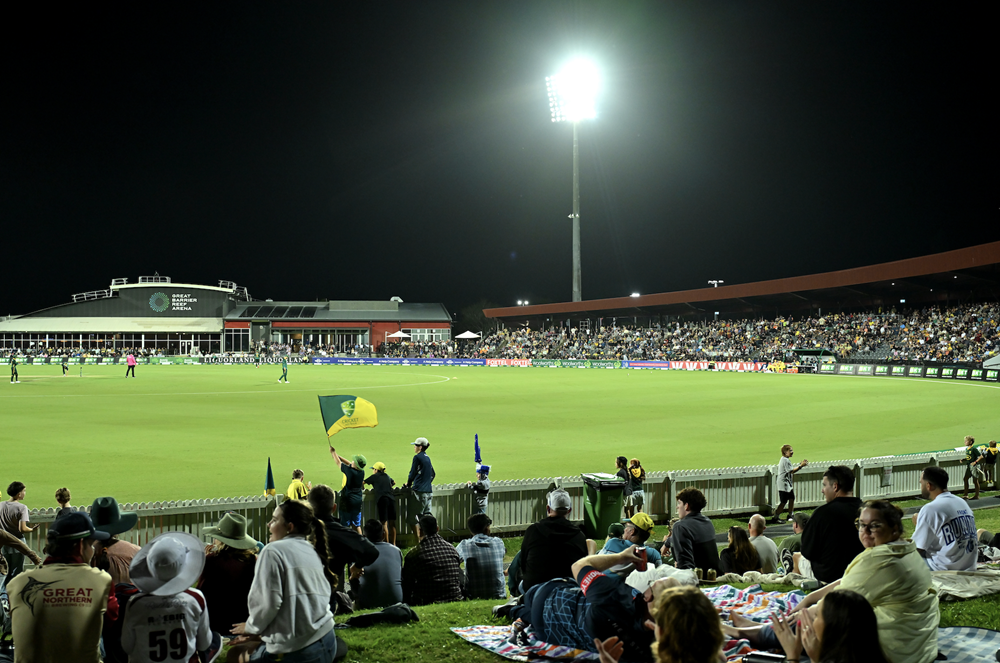
Generations of volunteer work will reach a major milestone last weekend at Mackay’s Great Barrier Reef Arena. The Harrup Park ground will host the second Test between Australia and Bangladesh from Saturday.
The arena grew from local cricket facilities and remains community-owned through the Mackay Cricket Association.
It has previously hosted Australia’s men’s and women’s teams in one-day internationals. Women’s Big Bash League matches have also been played there.
Why It Matters
The arena represents an unusual ownership model within modern Australian Test cricket. Harrup Park remains a not-for-profit community club rather than a government-owned stadium.
Clubs Queensland CEO Kelly Egan congratulated Harrup Park, the trading name of the Mackay Cricket Association.
“This is the perfect example of volunteers who work together over a long period of time to create a legacy for their cities, towns and regions,” Mr Egan said. “The first ball of the Test match on Saturday will be a special moment for a community that has shown incredible vision, generosity and resilience over so many years. Community clubs across Queensland are doing work every day to improve their communities and Mackay is the latest example of a legacy being realised for the region.”
Local Impact
Mackay formed its first cricket club in 1867, two years before the town council was established. That decision began more than a century of continued improvements by local players, members and volunteers.
In the late 1980s, three club members mortgaged their homes so the cricket club could expand and host functions.
One was Barry Jansen OAM, who served as Mackay Cricket Association president from 1986 to 2001. He remains a club regular.
Harrup Park CEO Adrian Young said the Test recognised the community effort behind the arena’s growth.
“This is literally a Test venue that has been built from the grassroots up,” Mr Young said. “It’s particularly unusual in modern Australian Test cricket to produce a Test venue that is not a government-owned stadium or major stadium authority. It’s grown from a local cricket association and community club and remains part of the community.”Over many years, we have worked closely with Cricket Australia to continue bringing the ground to a standard that means it can host cricket at the highest level.
“This is all due to the work of the community and so many volunteers over such a long period of time. That work has been recognised by the State and Federal Governments who have committed valuable funding to help Great Barrier Reef Arena to reach this point. This shows the great regional economic benefit that comes from public and community clubs working together to deliver multi-purpose legacy infrastructure that matters.”
By the Numbers
- 12th men’s Test venue: Great Barrier Reef Arena will join Australia’s small group of grounds approved to host men’s Test cricket.
- 32,000 members and 61 affiliated clubs: Harrup Park supports sporting and community organisations across the Mackay region.
- $23.5 million: The Queensland Government is funding Stage 2 of the arena’s planned expansion.
Zoom In
The weather forecast for the Test’s opening days is promising. Rain has affected several major cricket moments in Mackay’s history.
Don Bradman visited Mackay with a touring team in 1931 for two planned matches against a local side.
The first match began on 11 April but was abandoned because of rain. Mackay had reached 4-78 when play ended. A new match began on 12 April, with Bradman scoring a forceful 148 before suffering an unusual injury.
Reports said Bradman, “attempting a vigorous drive, struck his right foot with the bat and severely bruised both flesh and bone”.
Another major rain delay came during the Cricket World Cup in February 1992. Sachin Tendulkar was part of the Indian team facing Sri Lanka. The match was abandoned after two deliveries when rain arrived.
It became the shortest game in Cricket World Cup history.
Zoom Out
Queensland’s community clubs are membership-based, not-for-profit organisations serving their members and local communities.
More than 1,100 community clubs operate across Queensland, with a combined 5.6 million memberships. They employ more than 34,000 people and return over $549 million through community contributions.
The sector also generates more than $2.5 billion in annual economic activity for Queensland. Club surpluses fund services, cash support, non-cash benefits and community assets. They also support visitors and organise volunteers.
What To Look For Next?
Planning is under way for Stage 2 of Great Barrier Reef Arena.
The project will create a major multi-sport, community, education and high-performance facility. It will also address limited indoor sporting infrastructure across the growing region.
The club wants the arena ready to support events connected with the Brisbane 2032 Olympic Games.
“We’re aiming to be a venue that will be ready for the 2032 Olympic Games while never losing sight of our community roots, ensuring that we are available for the highest-level sports in the world and for the local sporting juniors who are beginning their journeys,” Mr Young said.