What’s happening?
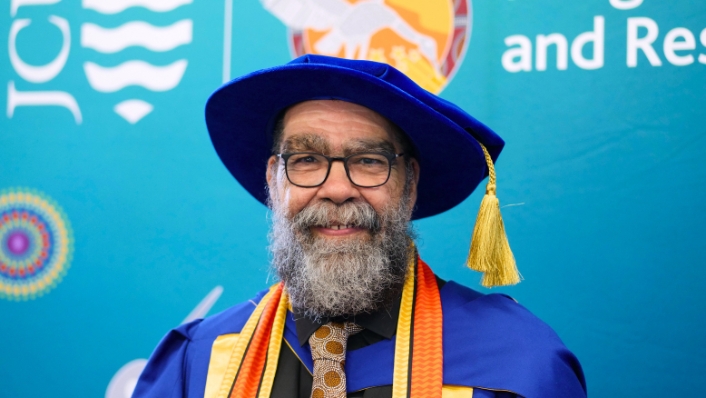
Australian Institute of Marine Science (AIMS) Indigenous Partnerships Coordinator Uncle Bob Muir has received an Honorary Doctor of James Cook University.
The award recognises “his eminent contributions to marine science and the field of valuing and incorporating Traditional Knowledge and Indigenous perspectives in marine stewardship, nationally and internationally”.
Uncle Bob is an Elder and Traditional Owner of Woppaburra Country, on the Keppel Islands in the southern Great Barrier Reef.
He grew up in Mackay and said he did not know his cultural heritage as a child.
That changed as an adult, when a relative contacted him about a family reunion on Great Keppel Island, or Woppa.
Why it matters?
The honour reflects decades of work across Country, community, science and advocacy.
In 1993, after learning he was Woppaburra and that his people were removed from their land in 1902, Uncle Bob and his brother Brian raised the Aboriginal flag in front of the Keppel Island resort.
They were claiming all Unallocated State Land on Woppa for the Woppaburra people.
The move drew national attention to Woppaburra rights and sovereignty at a time when Indigenous land rights were gaining wider public focus.
It also changed his life.
“By looking into my past, it gave me a future,” he said.
That shift took him from fishing, sailing and construction into leadership roles for his people in politics and on government boards and committees.
Through the Queensland Aboriginal Land Act, 174 hectares of land on Woppa were formally returned to the Woppaburra people in 2007.
Uncle Bob later worked for two years as a marine park ranger in Keppel Bay and Shoalwater Bay, caring for Woppaburra and neighbouring Darumbal Country.
He said he built his understanding of his people and Country with help from a State archaeologist and through research by his parents at the John Oxley Library.
“I was also working at the environmental education school, talking to groups from preschool to university, as well as tourists,” he said.
Local Impact
Uncle Bob’s story has a strong regional Queensland link.
He grew up in Mackay, worked on Country around the Keppel region, and now helps shape marine partnerships tied to the southern Great Barrier Reef.
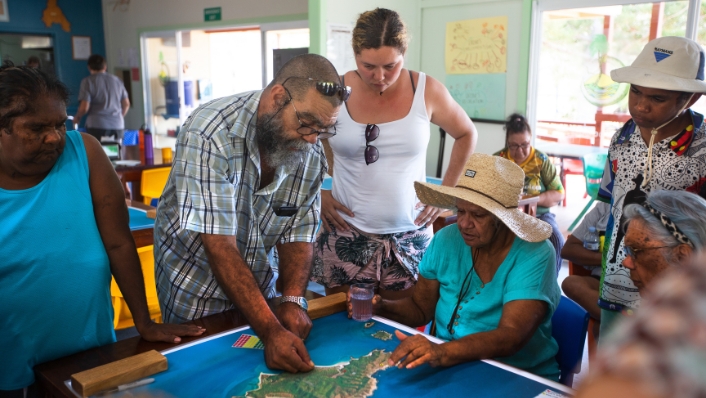
His work has also helped create local opportunities for Woppaburra people.
James Cook University said he helped establish a co-management arrangement with the Great Barrier Reef Marine Park Authority.
That work opened new research partnerships with AIMS and JCU.
It also supported an Indigenous ranger program that helps young Woppaburra people reconnect with heritage and care for land and sea.
By the numbers
- In 1902, the Woppaburra people were removed from their land, a loss that shaped the long push for return and recognition.
- In 1993, Uncle Bob and his brother Brian raised the Aboriginal flag at the Keppel Island resort to press Woppaburra land rights.
- In 2007, 174 hectares on Woppa were formally returned to the Woppaburra people through the Queensland Aboriginal Land Act.
- Over more than five years at AIMS, Uncle Bob said the Indigenous Partnerships team has grown to more than 16 First Nations members.
Zoom In
Uncle Bob joined AIMS more than five years ago through the Woppaburra Coral Project.
The project focused on coral reef restoration strategies around the Keppel Islands.
It also aimed to build mutual respect, cultural exchange and long-term impact through partnership work.
A recent analysis with Social Ventures Australia found the project set a new benchmark for collaboration between government agencies and Traditional Owners.
The analysis found it created significant social, economic and cultural value.
Uncle Bob said the work changed both sides.
“It was really empowering for both the scientists and our people,” he said.
“We started with the business of truth-telling, sitting in front of a few of our elders saying that AIMS has been here for 50 years and this is the first time we’ve come to speak to you.
“It was a bit of a shock to begin with, but from there the relationship grew to something that is really solid today.
“We had elders there that can be stubborn and tough, but they really embraced the AIMS researchers. They now have their complete trust.”
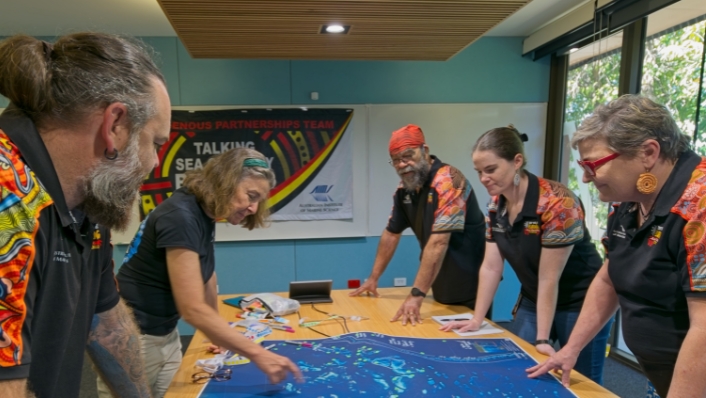
He said the AIMS Indigenous Partnerships team now plays a key role in building genuine ties between scientists and Traditional Owners.
“Over my five years with AIMS, the team has grown to more than 16 First Nations members,” he said.
“I am now referred to as the AIMS Elder in the Indigenous Partnerships Team, and with my permission, I’m addressed as Uncle Bob by all of AIMS.
“Everyone in the team has different skills. Together, we deliver positive impacts for Australian Traditional Owners and demonstrate how to successfully weave together Traditional Owners’ Knowledge and Westen Science to achieve greater outcomes for all involved.
“What we’re producing is world leading, and we’re still learning as we go.”
Uncle Bob said the team is often asked to speak about AIMS’ Indigenous engagement model and how it applies Free, Prior, and Informed Consent.
That principle is recognised under the UN Declaration on the Rights of Indigenous Peoples and links directly to self-determination.
He also said he values being part of AIMS research and academic papers.
“AIMS is empowering Traditional Owners and First Nations people,” he said.
“And not only in Australia, we’re also a great example for the Pacific and other places in the world.”
His work has also reached international forums, including COP27, where he made the case for Traditional Owner knowledge in climate science.
Zoom Out
The James Cook University (JCU) honour places Uncle Bob’s work in a bigger national and international frame.
The university said he is respected across multiple knowledge systems, including western science academia, for his generosity, integrity and cultural authority.
Its citation stated: “Uncle Bob has been central to the Woppaburra people’s journey toward Native Title recognition, return to Country and intergenerational healing. He led the establishment of a co-management arrangement with the Great Barrier Reef Marine Park Authority that created new research partnerships with AIMS and JCU and enabled the formation of an Indigenous ranger program supporting young Woppaburra people to reconnect with their heritage and care for their land and sea.”
The recognition also highlights a wider shift in marine science.
Traditional Knowledge is being taken more seriously, not as an add-on, but as part of how stewardship is shaped.
What To Look For Next?
This honour is likely to bring more attention to Indigenous-led marine partnerships in regional Queensland.
It may also strengthen support for co-designed reef research, ranger pathways and broader use of Free, Prior, and Informed Consent in science and stewardship.
For Uncle Bob, the recognition remains grounded in Country, community and responsibility.
“I appreciate being an honorary doctor, but I have another title, and that’s Uncle,” he said.